Choosing China’s top Industrial Motors requires more than comparing prices, power ratings, or polished catalog photographs. A dependable motor must match the machine, operating environment, control method, and maintenance capacity. Professor Thomas A. Lipo, a respected motor-drive researcher and author, states, “A motor should be selected as part of the complete drive system, not as an isolated component.” That principle deserves attention when evaluating Chinese manufacturers.
Start with the actual load. Record the required torque, speed range, starting frequency, duty cycle, and acceleration time. A conveyor moving heavy cartons may need high starting torque, while a cooling fan may prioritize efficiency and low vibration. Check the motor’s rated output at the working speed, not only its maximum capacity. Ask for efficiency data, insulation class, protection rating, temperature-rise results, and performance curves. IP55 may suit a clean factory, but dusty workshops could require stronger sealing and better maintenance planning.
Supplier reliability also matters. Review factory experience, testing equipment, export records, certifications, spare-parts support, and response times. Request a sample motor or witness a factory acceptance test when the project is important. Inspect terminal boxes, bearings, paint quality, cable glands, and nameplate details. Small defects often become expensive downtime.
A neat spreadsheet can still miss real operating conditions. Ambient heat, voltage fluctuation, poor alignment, and oversized drives may change performance. No selection method is perfect. Therefore, compare technical evidence with field feedback from similar installations. The best China Industrial Motors supplier is not always the cheapest. It is the one that can prove consistent quality, explain limitations honestly, and support the motor after delivery.
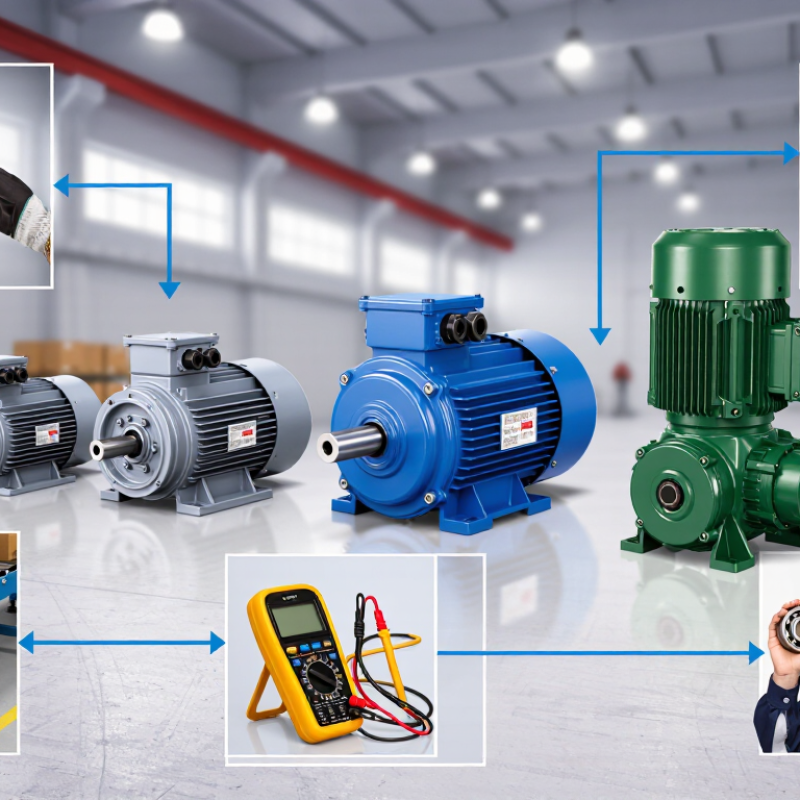
Choosing an industrial motor starts with the machine, not the catalog. In field inspections, I record the load cycle before comparing suppliers. Motor duty defines how long the motor runs and how often it starts. Continuous duty may suit a conveyor, while frequent starts need careful thermal evaluation. Intermittent loads can still overheat a motor during short, repeated cycles. Do not guess here. A duty label without measured operating time can produce an unreliable selection.
Power should match the real shaft demand, including acceleration and transmission losses. A motor that is too small may trip, run hot, or age quickly. An oversized motor can waste energy and complicate control. Measure speed at the driven shaft, not only at the motor nameplate. Gearboxes, belts, and slip change the final speed. I have seen acceptable calculations fail because startup torque was ignored. That detail matters. Check rated torque, peak torque, and load inertia together.
Confirm voltage, frequency, phase, and site supply stability before ordering. A 400 V motor is not automatically suitable for every 400 V installation. Cable length and voltage drop can affect starting performance. Select the IP rating from actual exposure: dust, washdown water, oil mist, or humidity. IP55 may be insufficient for aggressive cleaning areas. However, a higher IP rating does not replace proper drainage or maintenance. Leave room for doubt. Ask for test reports, efficiency data, dimensional drawings, and temperature-rise limits. Review the duty assumptions with an electrical engineer before production release.
IE4 motors usually reduce copper, iron, and mechanical losses more effectively. They may use less electricity and produce less workshop heat. Higher efficiency does not always mean better value.
Not always. Check the applicable standard edition, rated-power range, pole number, and testing method. Compare measured values under matching conditions.
Check rated output, voltage, frequency, speed, poles, and declared efficiency. Match the nameplate with the test report. Small discrepancies deserve attention.
Select torque for the actual load, not only rated power. Pumps often need steady torque, while conveyors may require strong breakaway torque. Cold starts can expose weak pull-up torque.
Across-the-line motors may draw five to eight times rated current during starting. This can cause voltage dips, overload trips, or generator instability. Ask for tested current curves.
Thermal class indicates winding temperature tolerance. Higher insulation class does not replace clean cooling or proper maintenance. A 1.15 service factor allows limited extra capacity, not continuous overloading.
Include purchase price, electricity, controls, maintenance, downtime, installation, and disposal. A 30 kW motor running 6,000 hours yearly may justify higher efficiency. Check several load points.
Request traceable test records, temperature-rise results, vibration data, efficiency curves, and clear tolerances. Verify bearings, insulation, protection, and repair access. A polished datasheet can still mislead.
No. Consider operating hours, load profile, starting method, ambient temperature, cables, drives, and protection settings. A lightly loaded fan may not recover the higher purchase cost. The label is not the whole truth.
Choosing the right Industrial Motors requires more than comparing purchase prices. Start by defining the motor’s duty cycle, rated power, operating speed, voltage, and required IP protection level. These specifications should match the machine’s working conditions and installation environment. Next, compare IE3 and IE4 efficiency classes according to IEC 60034-30-1 and GB 18613-2020, considering how efficiency affects long-term energy consumption. Torque performance, starting current, thermal class, and service-factor data should also be reviewed to ensure reliable operation under actual loads.
Before making a final decision, verify the manufacturer’s ISO 9001 production controls, CCC certification, and relevant IEC test reports. A complete evaluation should include total cost of ownership rather than purchase cost alone. By combining motor efficiency, expected operating hours, electricity prices, maintenance needs, and service life, users can identify a practical and dependable motor solution that delivers stable performance and better value over time.

 Sunvim Motor