How to Choose a Synchronous Motor in 2026?

Time:2026-09-06 Author:Henry
0%

Choosing a Synchronous Motor in 2026 requires more than comparing catalog horsepower and purchase prices. The correct decision begins with the driven load, operating schedule, power quality, and installation environment. A pump running continuously has different needs from a compressor with frequent starts. Small details matter.

Modern synchronous motors can deliver precise speed, high efficiency, and improved power factor. These benefits become valuable in factories facing rising energy costs and stricter efficiency targets. However, performance depends on correct sizing. An oversized motor may operate inefficiently at light load. An undersized unit may overheat during acceleration or peak demand.

Review the required torque, speed range, starting method, and duty cycle. Check whether the application needs a variable frequency drive, soft starter, or direct-on-line starting. Evaluate ambient temperature, dust, moisture, altitude, and available cooling. A motor installed near a dusty kiln needs stronger protection than one inside a clean laboratory. Ask manufacturers for efficiency data, thermal limits, maintenance requirements, and tested operating curves.

Reliable selection should reference recognized standards, including IEC or NEMA requirements, while considering local electrical practices. Experienced engineers also inspect the complete system, not only the motor nameplate. Couplings, bearings, harmonics, and control settings can change real-world results. Field experience shows that a technically excellent motor can still disappoint when commissioning is rushed.

There is no universal choice.

This guide examines the practical factors behind a dependable Synchronous Motor decision in 2026. It also questions common assumptions, because advertised efficiency may not match every operating condition. Performance should be verified with measurable data, credible documentation, and a lifecycle view covering energy, service, downtime, and replacement costs.
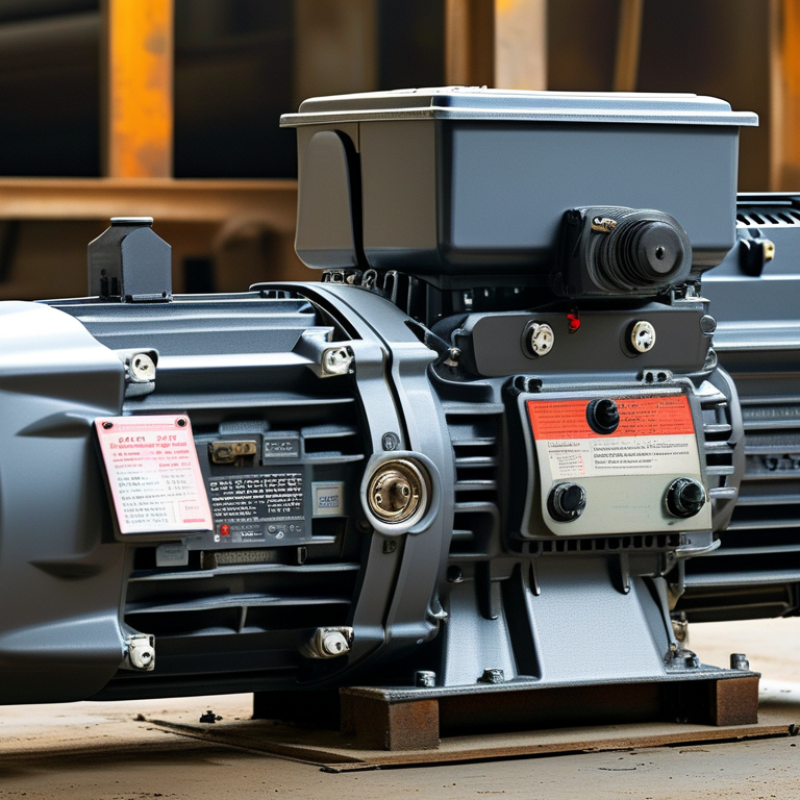
How to Choose a Synchronous Motor in 2026?

Define the Application Requirements for a Synchronous Motor

How to Choose a Synchronous Motor in 2026?

Define the application before comparing motor specifications. Start with the driven equipment, not the motor catalogue. Record the required power, shaft speed, starting torque, and operating cycle. A conveyor may need steady torque, while a compressor can demand sharp starting power. Measure the real load if possible. Estimates often hide costly surprises.

Check the available voltage, frequency, control method, and installation space. Then review the environment, including dust, moisture, heat, altitude, and ventilation. Specify whether the motor runs continuously or starts several times per hour. Power factor requirements also matter, especially in facilities with strict electrical limits. In practical engineering work, the load profile usually matters more than a single rated-power figure. A neat spreadsheet can still mislead. Recheck those assumptions.

Tips: Build a one-page requirement sheet. Include normal load, peak load, speed range, acceleration time, and allowable temperature rise. Ask the maintenance team about bearing access and spare-part limits. Confirm the drive system can control the motor during starting and fault conditions. Leave space for safe inspection. Small omissions become expensive later. Do not choose only by efficiency percentage; lifecycle cost, reliability, commissioning skill, and downtime deserve equal attention. If the process may change in 2026, include a modest operating margin, but avoid excessive oversizing. Oversizing can reduce performance.

How to Choose a Synchronous Motor in 2026?

Define the required operating speed before selecting the motor pole count and frequency.

The chart shows the theoretical synchronous speed calculated using ns = 120f / P, where f is frequency in hertz and P is the number of poles. Use the application’s required shaft speed, grid frequency, load torque, starting method, and allowable speed variation to determine the most suitable motor configuration. Actual operating speed may differ slightly because of control settings, load conditions, and system design.

Compare Motor Types, Power Ratings, and Speed Requirements

How to Choose a Synchronous Motor in 2026?

Choosing a synchronous motor starts with the load, not the catalog headline. Compare motor types against torque, power, operating hours, and maintenance access. A permanent-magnet synchronous motor delivers high efficiency and strong torque in a compact frame. It suits pumps, compressors, and variable-speed machinery. A wound-field motor allows excitation control and can support demanding industrial loads. However, its brushes or slip rings may increase maintenance. Reluctance motors avoid magnets, but their torque ripple and control requirements deserve careful testing. Each option has trade-offs. Speed is unforgiving.

Power ratings should match the real duty cycle. A 30 kW motor may overheat if the machine repeatedly starts under heavy load. Check continuous power, peak torque, service factor, ambient temperature, and altitude. Review the drive’s overload capacity too. A motor rated for 1,500 rpm may not deliver the same torque at 300 rpm. That detail is often missed. It should not be.

Speed requirements depend on frequency, pole count, and control method. A two-pole motor runs near 3,000 rpm on a 50 Hz supply, while a four-pole motor runs near 1,500 rpm. Actual speed falls slightly under control limits and load conditions. For precise speed, use a compatible variable-frequency drive and confirm feedback requirements. Measure acceleration time on site when possible. Calculations can look perfect, yet a cold gearbox, sticky bearing, or unstable load may change the result. Recheck the assumptions before approving the final motor.

Evaluate Efficiency, Control Methods, and Operating Conditions

How to Choose a Synchronous Motor in 2026?

Efficiency should be judged across the duty cycle, not only at rated load. The U.S. Department of Energy’s Motor Systems Market Assessment estimates that motor systems consume about 70% of industrial electricity. This makes part-load losses financially important.

Check the motor’s efficiency class under IEC 60034-30-1, then compare losses at actual speeds and loads. A high-efficiency rating alone is not enough.

Control method changes the result. A variable-frequency drive can provide smooth acceleration, speed adjustment, and improved process control. It may also introduce harmonics, cooling limitations, and additional installation costs.

Line-start synchronous motors suit stable-speed duties, while inverter-fed motors fit changing production demands. Review power factor, starting torque, braking needs, and expected starts per hour. Keep the control cabinet cool.

Operating conditions decide reliability. Record ambient temperature, altitude, dust, moisture, shaft loading, and daily running hours.

The International Energy Agency’s Energy Efficiency 2024 report continues to identify motor systems as a major industrial efficiency opportunity. That opportunity disappears when poor ventilation causes thermal derating. It happens more often than many specifications admit.

A practical selection sheet should include measured load data, not guesses. A perfect spreadsheet can still choose the wrong motor.

Commissioning checks may reveal oversized ratings, unstable control tuning, or unexpected low-load operation. Leave room for that correction.

Reliability grows from verified conditions, not attractive catalogue numbers.

Check Installation, Maintenance, and System Compatibility

Choosing a synchronous motor in 2026 starts with the installation environment, not the nameplate. Check voltage, frequency, available starting current, enclosure rating, cooling method, and foundation stiffness. A rigid base matters. Small alignment errors can increase vibration and bearing stress. The International Energy Agency reports that motor-driven systems use about 53% of global electricity, so installation losses deserve serious attention.

Maintenance planning should match the motor’s duty cycle. Record vibration, winding temperature, insulation resistance, and bearing condition at defined intervals. For dusty or humid sites, inspect filters, seals, terminals, and cooling paths more often. The U.S. Department of Energy’s Motor Systems Market Assessment found that motor systems can represent roughly 70% of industrial electricity use. Poor maintenance therefore affects both reliability and operating cost. Sometimes, a cheaper inspection schedule is expensive.

System compatibility needs a wider check. Confirm whether the motor connects directly to the grid, a soft starter, or a variable-frequency drive. Review starting torque, load inertia, power-factor correction, protection settings, harmonics, and emergency stopping requirements. IEC 60034-30-1 defines motor efficiency classes, but efficiency data alone cannot confirm suitability. I would not trust a perfect spreadsheet without testing the actual load. Site temperature, cable length, and control response may expose problems during commissioning. The European Commission’s Ecodesign analysis also shows that efficiency standards can produce substantial lifecycle savings, but only when equipment operates within its intended conditions.

How to Choose a Synchronous Motor in 2026? - Check Installation, Maintenance, and System Compatibility

Selection Dimension What to Check Typical Engineering Data Installation Requirement Maintenance and Compatibility Notes
Load Power and Torque Determine continuous power, starting torque, peak torque, duty cycle, and acceleration time. Select rated power above the calculated continuous demand, normally with a practical reserve of approximately 10–15% where operating conditions are variable. Confirm the driven equipment can tolerate the motor’s starting and pull-in torque. Avoid prolonged operation below the minimum stable load or above the motor’s pull-out torque.
Rated Speed and Pole Count Match synchronous speed to the machine speed and transmission arrangement. Synchronous speed is calculated as Ns = 120 × f ÷ P. At 50 Hz, common speeds are 3,000 rpm for 2 poles, 1,500 rpm for 4 poles, and 1,000 rpm for 6 poles. Check coupling, gearbox, belt, and shaft alignment requirements for the selected speed. Monitor vibration and bearing condition because imbalance and misalignment become more significant at higher speeds.
Power Supply Frequency Verify the available grid or converter frequency. Common industrial systems use 50 Hz or 60 Hz. A frequency change alters synchronous speed and may affect torque, cooling, and control settings. Confirm the motor, excitation system, and protection equipment are configured for the actual frequency. Record voltage and frequency during commissioning and investigate persistent deviations from the rated values.
Voltage and Phase Configuration Check line voltage, phase sequence, number of phases, and allowable voltage imbalance. Industrial synchronous motors are commonly three-phase. The rated voltage must match the system or an approved transformer must be provided. Provide correct phase rotation, short-circuit protection, isolation, grounding, and cable sizing. Phase-voltage imbalance can increase negative-sequence currents and heating; investigate abnormal current differences promptly.
Power Factor Requirement Decide whether the motor will operate at unity power factor or provide reactive-power support. An overexcited synchronous motor can supply leading reactive power; an underexcited motor consumes reactive power. The permitted range depends on the motor design and operating point. Coordinate excitation controls with plant power-factor correction and avoid leading-power-factor conditions that exceed system limits. Trend excitation current, stator current, and power factor together to detect unstable operating conditions.
Starting Method Select across-the-line, damper-winding, reduced-voltage, or converter-assisted starting according to motor size and grid strength. A synchronous motor is not self-starting without an appropriate starting arrangement. Starting current and acceleration time must be confirmed. Verify the supply can withstand starting voltage drop and that the excitation sequence is correctly interlocked. Limit repeated starts because thermal stress can accumulate in stator windings, rotor components, and bearings.
Excitation System Check field voltage, field current, excitation response, and the required control mode. Excitation may be supplied through slip rings and brushes or a brushless exciter, depending on the motor construction. Provide field-loss protection, excitation-limit control, and suitable access for inspection and testing. Inspect brushes, slip rings, rectifier components, and field insulation according to the equipment design and operating environment.
Efficiency and Operating Cost Compare efficiency at the actual load profile rather than only at rated load. Efficiency varies with size, speed, cooling method, excitation level, and load. Use tested efficiency data at several load points for lifecycle calculations. Ensure ventilation and cooling-water or air systems, where applicable, are available before full-load operation. Clean cooling paths and verify fan performance because restricted airflow increases winding and bearing temperatures.
Protection and Monitoring Specify protection for overload, short circuit, ground fault, phase loss, overtemperature, overspeed, and loss of synchronism. Typical monitoring points include stator temperature, bearing temperature, vibration, field current, stator current, and winding insulation condition. Coordinate relay settings with the motor thermal limit, starting profile, and upstream protection. Test alarms and trips periodically; do not bypass field-loss or thermal protection during normal operation.
Installation Environment Assess ambient temperature, altitude, humidity, dust, corrosive gases, water exposure, and hazardous-area classification. Standard ratings often assume an ambient temperature near 40°C and a defined installation altitude; derating may be required outside the specified conditions. Choose the enclosure and ingress-protection level for the site. Provide adequate clearance for cooling and service access. Keep air inlets clean and control condensation with heaters or suitable environmental protection when required.
Mechanical Mounting Check foundation stiffness, shaft height, mounting arrangement, coupling type, and rotor handling requirements. The foundation should limit vibration and maintain alignment under operating temperature and load conditions. Perform soft-foot checks, precision alignment, correct bolt tightening, and coupling inspection before startup. Recheck alignment after thermal stabilization and after any major maintenance work.
Bearings and Lubrication Identify sleeve or rolling-element bearings, lubrication method, oil type, grease type, and relubrication interval. The correct lubricant and interval depend on bearing design, speed, load, temperature, and contamination level; never mix incompatible lubricants. Provide oil systems, filters, coolers, or grease access points when specified by the motor design. Trend temperature, vibration, oil condition, and bearing noise instead of relying only on calendar-based servicing.
Insulation and Electrical Testing Review insulation class, winding temperature rise, resistance, polarization index, and surge or dielectric test requirements. Common insulation systems use thermal classes such as Class F or Class H; the permissible temperature rise depends on the applicable design and standard. Perform pre-commissioning tests with appropriate isolation and discharge procedures, following the motor manufacturer’s test limits. Keep winding surfaces dry and clean; compare test results with historical values to identify deterioration.
Drive and Control Compatibility Confirm compatibility with the synchronous controller, converter, excitation regulator, PLC, and communication network. Review control bandwidth, feedback signals, switching frequency, harmonic distortion, and allowable voltage rise at the motor terminals. Use shielded control wiring, correct grounding, and filters or reactors when required by the power-electronics design. Check encoder or resolver signals, alarm mapping, firmware parameters, and fail-safe shutdown logic during commissioning.
Standards and Documentation Specify applicable motor, electrical safety, efficiency, enclosure, and hazardous-area requirements. Use applicable editions of international or regional standards, such as IEC 60034 or equivalent local requirements. Obtain certified drawings, terminal diagrams, foundation data, protection settings, test reports, and commissioning procedures. Maintain a service record containing operating hours, test results, faults, bearing work, alignment data, and insulation readings.

Calculate Total Cost and Select the Best Motor Model

How to Choose a Synchronous Motor in 2026?

Calculate Total Cost and Select the Best Motor Model

A synchronous motor should be selected from its operating profile, not its catalog price. Record load percentage, annual running hours, starting frequency, speed, and power factor. The International Energy Agency reports that electric motor systems consume about 46% of global electricity. Even a small efficiency difference can therefore change lifetime costs. Compare purchase price, drive equipment, installation, commissioning, electricity, maintenance, spare parts, and planned downtime. Do not ignore cooling requirements or control-panel modifications.

Use the IEC 60034-30-1 efficiency classification when comparing models. A higher efficiency class may cost more initially, but it can reduce energy losses during continuous operation.

Calculate annual energy cost with this formula:

rated power × load factor × operating hours × tariff ÷ efficiency

Add demand charges where applicable. Shortlist motors that match the real load range, not only the maximum rating. Oversizing can increase capital cost and reduce efficiency at light loads.

The U.S. Department of Energy’s motor-system assessments also emphasize system-level savings rather than motor efficiency alone. That matters. A highly efficient motor can still produce poor economics if its controller, alignment, or cooling system is unsuitable.

In practical evaluations, the first estimate is often too optimistic. Tariffs change. Production stops. Maintenance labor is rarely priced accurately. Recalculate using low, expected, and high operating scenarios before approving the final model.

FAQS

: What should be checked before installing a synchronous motor?

: Check voltage, frequency, starting current, enclosure rating, cooling method, and foundation stiffness. A rigid base matters.

Why is motor alignment important?

Small alignment errors can increase vibration, bearing stress, and unexpected maintenance. Measure it twice.

How often should motor maintenance be performed?

Set inspection intervals according to the duty cycle, site conditions, and operating hours. Dusty or humid sites need more frequent checks.

What should maintenance inspections include?

Record vibration, winding temperature, insulation resistance, bearing condition, terminal tightness, filters, seals, and cooling paths.

How can system compatibility be confirmed?

Check direct-grid connection, soft-start equipment, or variable-frequency control. Review starting torque, load inertia, harmonics, protection settings, and emergency stopping.

Is a higher motor efficiency class always the best choice?

No. Controller losses, poor alignment, unsuitable cooling, and light-load operation can reduce the expected savings.

How should the total motor cost be calculated?

Include purchase, installation, controls, commissioning, electricity, maintenance, spare parts, cooling, and planned downtime.

Can an oversized synchronous motor create problems?

Yes. It may cost more and operate inefficiently during light loads. Select a model matching the real load range.

What information is needed for energy-cost estimates?

Record rated power, load factor, operating hours, electricity tariff, efficiency, starting frequency, and demand charges.

Should the first financial estimate be trusted?

Not completely. Recalculate low, expected, and high scenarios because tariffs, production stops, and labor costs can change.

Conclusion

Choosing the right Synchronous Motor in 2026 starts with clearly defining the application requirements, including load characteristics, operating schedule, torque demands, and environmental conditions. Compare suitable motor types by power rating, rated speed, starting method, and control flexibility to ensure the motor can deliver stable and reliable performance. Efficiency should also be assessed carefully, especially for systems that operate continuously or under variable loads.

Before making a final decision, evaluate available control methods, temperature, humidity, dust exposure, and other operating conditions. Confirm that the motor is compatible with the power supply, drive system, mechanical layout, and protection equipment. Installation space, maintenance access, service requirements, and expected operating life should also be considered. Finally, calculate the total cost, including purchase, installation, energy consumption, maintenance, and potential downtime. By balancing technical performance, reliability, compatibility, and long-term value, users can select the most suitable motor model for their specific application.


Henry

Henry

Henry is a dedicated marketing professional with a profound expertise in the company's offerings. With years of experience in the industry, he possesses an impressive understanding of the market dynamics and consumer behaviors that drive success. Henry is committed to sharing his insights through......