Choosing the right Electric Motor is a business decision, not merely a specification exercise. It affects energy use, uptime, product quality, and maintenance costs. The International Energy Agency reported that electric motor systems consume about 53% of global electricity. That is substantial. Its Energy Efficiency 2016 report makes motor selection relevant far beyond the equipment room.
Yet that global figure does not predict what one facility will save. Duty cycle, load, starting method, environment, and control strategy all shape real performance. A motor running below its useful load may waste energy, while an undersized unit can overheat. Small details matter. A dusty workshop, frequent starts, or a pump operating against changing pressure can alter the best choice.
Nameplate efficiency alone is not enough. Businesses should compare efficiency class, rated speed, torque, voltage, service factor, and lifecycle cost. U.S. Department of Energy motor-systems guidance also emphasizes assessing the complete driven system, not just the motor. That means evaluating it alongside its pump, fan, compressor, or conveyor. This guide explains how to match practical operating needs with dependable technical data. It also recognizes a limitation: estimates depend on measured operating conditions, and those measurements are often incomplete. Better decisions start with honest measurements.
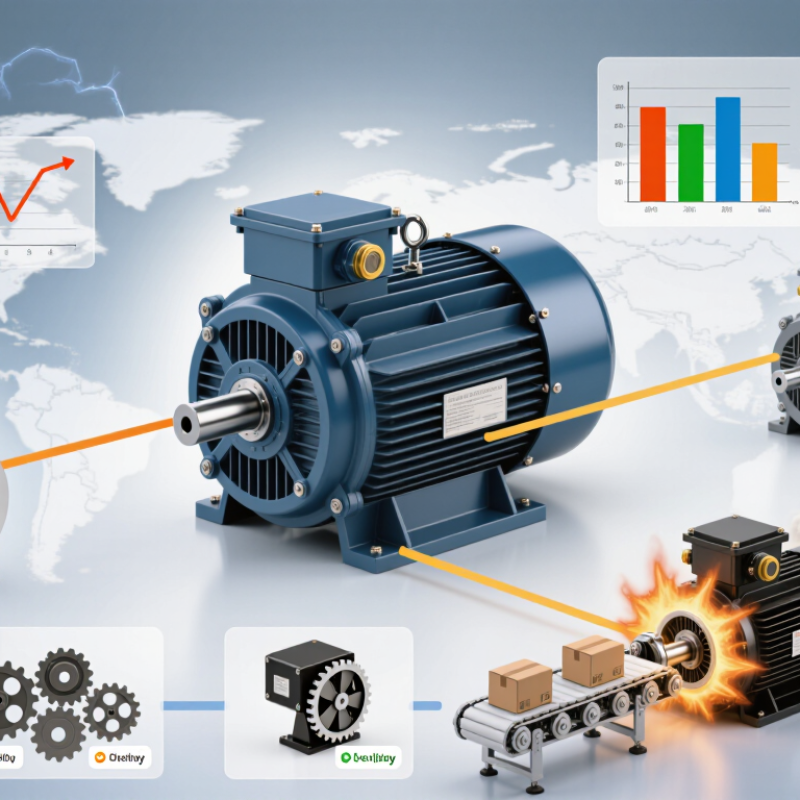
Why Choose the Right Electric Motor for Your Business?
Identify Your Business’s Power and Operating Requirements
Selecting an electric motor starts with the work it must perform. List the equipment’s power supply, voltage, and phase, then check the required speed and available space. Note whether the motor runs continuously or starts and stops throughout the day. A conveyor moving boxes has different needs from a pump handling changing flow. Small details matter.
Consider the load during startup, not only during normal operation. A machine that begins under heavy load may need more starting torque. Heat, dust, moisture, and limited ventilation can also affect motor selection and maintenance. Check how the motor will connect to existing controls and mounting points. A mismatch can mean extra installation work. Even a careful estimate can be wrong, so compare your figures with equipment data and ask a qualified technician to review uncertain requirements.
Tips: Keep a simple operating log for a typical workweek. Record run time, starts per hour, load changes, and any overheating or vibration. Share those notes when comparing motor options, and confirm that the proposed motor suits your actual duty cycle—not just the ideal conditions on paper.
| Requirement | What to Identify | Example Operating Condition | Why It Matters When Selecting a Motor |
|---|---|---|---|
| Required output power and torque | Equipment load, required torque, speed, and any peak-load conditions. Use equipment specifications or have the load assessed. | A conveyor may need high starting torque when loaded, while a fan typically has a different load profile. | The motor must meet the load’s torque and power needs without being undersized or unnecessarily oversized. |
| Power supply | Available phase, voltage, frequency, and circuit capacity at the installation site. | Common North American supplies include single-phase 120 or 240 V and three-phase 208, 230, or 460 V; actual availability varies by site. | The motor and its controls must be compatible with the supply. Confirm the facility’s measured or documented electrical service before ordering. |
| Operating duty | Hours of operation, starts and stops per hour, and whether operation is continuous or intermittent. | A process pump may run for long periods; a machine actuator may start and stop frequently. | Duty and starting frequency affect motor heating and service life. Check the motor’s rated duty and the application requirements. |
| Speed and speed control | Required shaft speed, acceptable speed variation, and whether speed must change during operation. | A fixed-speed pump may run at a set speed; a fan may need variable airflow. | Speed requirements influence motor type and control choice. Variable-speed operation may require a compatible drive and motor. |
| Starting and acceleration | How quickly the load must reach operating speed, and whether the electrical system can support starting current. | A heavily loaded machine may need controlled acceleration to reduce mechanical shock. | Starting method and control equipment can affect current draw, torque, and stress on connected equipment. Check compatibility with the supply and load. |
| Installation environment | Ambient temperature, moisture, dust, corrosive substances, washdown, and ventilation conditions. | A dusty production area or a wet cleaning zone may require an enclosure suited to that exposure. | Enclosure and cooling choices help protect the motor. Select protection based on the actual environment and applicable site requirements. |
| Mounting and mechanical fit | Mounting orientation, shaft dimensions, frame size, available space, coupling, and alignment needs. | A replacement motor must fit the existing base and connect correctly to the driven equipment. | Matching mechanical dimensions and connection details can reduce installation changes and alignment problems. |
| Efficiency and operating cost | Expected annual running hours, energy cost, load profile, and applicable efficiency requirements. | A motor operating for many hours each day may make energy use a significant part of its lifecycle cost. | Compare rated efficiency and expected operating conditions, not purchase price alone. Actual savings depend on load, hours, and electricity rates. |
Before purchase, verify the equipment load, site supply, motor nameplate requirements, installation conditions, and applicable electrical codes with a qualified professional.
Start with the machine’s real workload, operating hours, and start frequency. The nameplate is not enough.
AC induction motors often suit steady-duty equipment. They are rugged and widely available. Frequent speed changes may require a compatible variable-frequency drive.
It can provide high efficiency and compact size. It may cost more and needs a suitable drive. Check the full system cost.
Compare rated power, voltage, frequency, speed, torque, and duty cycle. Check starting torque and current for loaded equipment.
A conveyor may start under a heavy load, while a fan’s demand can change. Compare motors at typical operating points, not only peak load.
Check for dust, moisture, heat, and washdown exposure. Match the ingress-protection rating to the site. Small details matter.
Check inspection needs for bearings, seals, and cooling parts. Consider whether technicians can reach the motor without removing nearby equipment.
Request efficiency data, duty-cycle guidance, spare-part availability, and repair support. Ask who handles troubleshooting and how quickly they respond.
Keep installation and service records, plus actual load details. Review the maintenance plan after a few months. Plans can miss things.
Choosing the right Electric Motor starts with understanding your business’s power supply, operating conditions, workload, and performance goals. Compare motor types and key specifications, including power, speed, torque, and starting characteristics, to find an option suited to the job. Consider how the motor will connect to your equipment and whether its design can handle the surrounding conditions, such as temperature, dust, moisture, or continuous operation.
Look beyond the purchase price when making your decision. Energy efficiency and expected operating hours can have a major impact on total ownership costs over time. Reliability, maintenance requirements, access to replacement parts, and the quality of supplier support also affect long-term performance. By weighing these factors together, your business can select a motor that fits its equipment, helps manage energy use, and supports dependable operation.

 Sunvim Motor