Choosing the right Ac Electric Motor is a practical decision with long-term financial and operational consequences. The wrong model can create excess heat, vibration, noise, and avoidable maintenance. A suitable motor should match the load, duty cycle, voltage, speed, enclosure, and installation environment. It must also fit the application’s future needs, not only today’s conditions.
The International Energy Agency’s report, Energy-Efficiency Policy Opportunities for Electric Motor-Driven Systems, estimates that motor-driven systems consume roughly 43% to 46% of global electricity. The U.S. Department of Energy also identifies motor systems as a major industrial energy user. These figures make efficiency more than a marketing feature. It affects operating budgets, carbon performance, and equipment life. Dr. Paul Waide, an energy-efficiency specialist and contributor to IEA motor-system analysis, has described motor systems as “the single largest end use of electricity worldwide.” That perspective deserves attention.
This guide presents ten practical tips for evaluating an Ac Electric Motor. It considers efficiency classes, starting torque, variable-frequency-drive compatibility, bearing quality, cooling methods, and protection ratings. Real installations often reveal overlooked details. A dusty workshop may need a different enclosure from a clean production room. A conveyor may demand higher starting torque than a fan. Nameplate data can also be incomplete or misunderstood. No checklist removes every uncertainty. Careful measurement still matters. The best choice balances purchase price, energy use, maintenance access, reliability, and verified manufacturer data. Some specifications may look impressive on paper yet perform poorly when the motor is incorrectly sized. That uncomfortable possibility should remain part of the review.
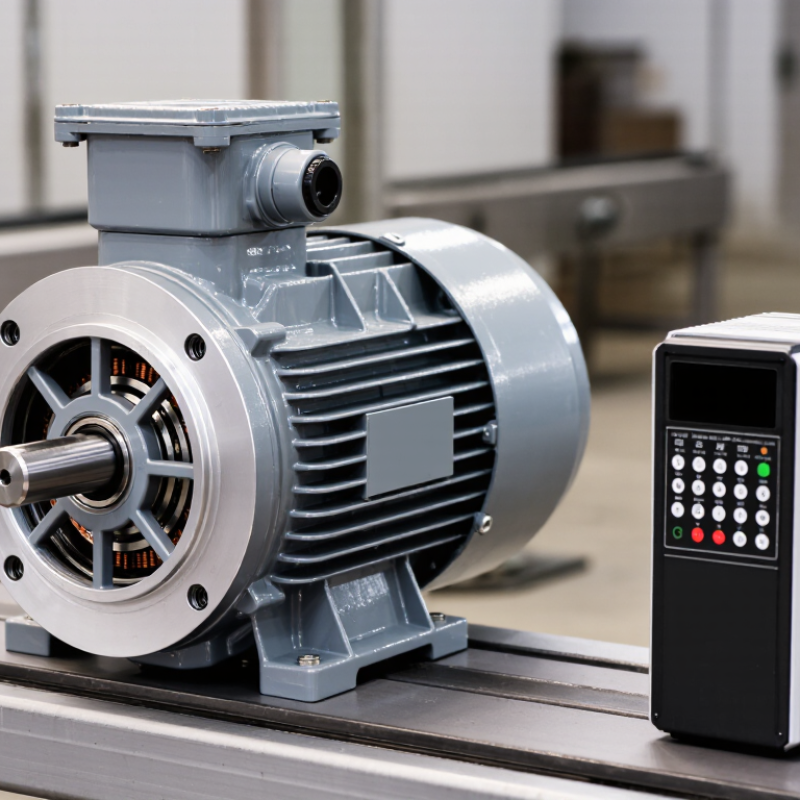
10 Tips for Choosing the Right AC Electric Motor?
Define the application before comparing motor ratings. A conveyor needs strong starting torque, while a fan usually needs smoother, lighter acceleration. Pumps may face frequent starts, pressure changes, or dry-running risks. Record the driven equipment, shaft speed, duty cycle, and starts per hour. Measure twice. Guessing the load can create costly overheating.
Check both running torque and starting torque. A motor that matches the running load may still struggle during acceleration. Consider voltage, frequency, mounting position, available space, and coupling method. The operating environment matters just as much. Dusty workshops, humid washdown areas, and high-temperature rooms need suitable protection. Noise matters, especially near occupied workspaces. Corrosive vapors can damage exposed components quickly. In field assessments, small details often reveal larger problems, such as blocked airflow or an undersized cable. A spreadsheet helps, but it cannot replace a site inspection. I have seen acceptable calculations fail when ventilation was ignored. That assumption deserves review. Check the motor’s enclosure rating, insulation class, ambient temperature limits, and service conditions against reliable technical documentation. Leave practical margin, but avoid excessive oversizing, which can reduce efficiency and raise purchase costs.
| No. | Selection Dimension | What to Define | Practical Selection Guidance | Recommended Verification |
|---|---|---|---|---|
| 1 | Application and Motion Profile | Identify whether the motor drives a pump, fan, compressor, conveyor, mixer, hoist, machine tool, or another load. | Determine whether the load requires constant speed, variable speed, frequent reversing, positioning, or continuous rotation. The application determines the required motor type, control method, and duty rating. | Document speed range, acceleration time, stopping method, reversing frequency, and the driven machine's operating sequence. |
| 2 | Required Power and Torque | Establish the continuous power, rated speed, shaft torque, peak torque, and any overload requirement. | For rotational loads, torque can be estimated using T = 9550 × P ÷ n, where T is in N·m, P is in kW, and n is speed in r/min. Select sufficient margin without excessive oversizing. | Use measured load data or the equipment manufacturer's requirements. Confirm both continuous torque and the highest transient torque. |
| 3 | Starting and Acceleration | Define starting load, inertia, allowable acceleration time, starting frequency, and available starting current. | High-inertia loads may require a soft starter, variable-frequency drive, reduced-voltage starting method, or a motor with suitable starting torque. Direct-on-line starting can produce high inrush current. | Compare motor starting torque with load torque throughout acceleration. Check supply capacity, voltage drop, and protection-device settings. |
| 4 | Supply Voltage, Phase, and Frequency | Confirm the available AC voltage, single- or three-phase supply, frequency, and voltage tolerance. | The motor nameplate must match the electrical system. Common industrial systems use three-phase power, while smaller equipment may use single-phase power. Frequency affects synchronous speed and operating characteristics. | Verify supply measurements, wiring configuration, permissible voltage and frequency ranges, and compatibility with the starter or drive. |
| 5 | Speed and Speed Control | Define required operating speed, speed variation, minimum speed, maximum speed, and speed regulation accuracy. | Motor synchronous speed is approximately 120 × frequency ÷ number of poles. An induction motor runs slightly below synchronous speed because of slip. Use a variable-frequency drive when adjustable speed is required. | Check the motor's allowable speed range, cooling performance at low speed, overspeed limit, and drive-motor compatibility. |
| 6 | Duty Cycle and Thermal Load | Record operating hours, starts per hour, load variation, standby periods, and intermittent or cyclic operation. | Continuous-duty applications require a motor capable of carrying the load continuously. Frequent starts, stops, or overloads increase heating and may require a higher thermal capacity or a duty-specific design. | Calculate equivalent thermal load and starting losses. Confirm the duty classification and allowable temperature rise for the intended cycle. |
| 7 | Operating Environment | Assess ambient temperature, humidity, dust, water, chemicals, salt exposure, altitude, and hazardous-area requirements. | Choose an enclosure and protection level appropriate to the environment. Dusty or wet locations may require higher ingress protection, while explosive atmospheres require specifically certified equipment. | Review enclosure rating, insulation system, cooling method, altitude derating, corrosion protection, and area classification before installation. |
| 8 | Efficiency and Energy Consumption | Estimate annual running hours, average load, electricity cost, and the importance of reducing operating losses. | For motors operating many hours per year, a higher-efficiency motor can reduce total cost of ownership. Select efficiency using the actual load profile rather than rated power alone. | Compare rated efficiency, part-load performance, power factor, annual energy use, purchase cost, and expected payback period. |
| 9 | Mechanical Fit and Load Connection | Define mounting arrangement, frame dimensions, shaft diameter, shaft extension, keyway, bearings, coupling, and alignment requirements. | The motor must fit the equipment mechanically and tolerate radial or axial loads from belts, gears, pumps, or other couplings. Improper alignment can cause vibration, bearing damage, and premature failure. | Confirm mounting dimensions, shaft details, permissible external loads, coupling method, balancing requirements, and installation clearances. |
| 10 | Protection, Controls, and Maintenance | Define overload protection, short-circuit protection, temperature monitoring, emergency stopping, inspection access, and maintenance resources. | Use correctly coordinated protective devices and suitable motor control. Consider thermal sensors, vibration monitoring, bearing serviceability, lubrication requirements, spare parts, and expected repair intervals. | Review wiring diagrams, protection settings, grounding, control logic, maintenance procedures, test points, and applicable electrical safety requirements. |
Identify the driven equipment, shaft speed, duty cycle, and starts per hour. A conveyor may need strong starting torque. A fan usually accelerates more gently. Guessing the load can cause overheating.
Running torque keeps equipment moving. Starting torque begins acceleration under load. A loaded conveyor may stall, even when its running load appears acceptable. This is easy to underestimate.
Check voltage, phase, frequency, voltage tolerance, and available fault current. A 230-volt, three-phase motor cannot directly replace a 400-volt model. Frequency also changes operating speed.
Synchronous speed follows 120 multiplied by frequency, divided by pole count. A four-pole motor runs near 1,500 rpm at 50 Hz. At 60 Hz, it runs near 1,800 rpm before slip.
Examine dust, moisture, heat, corrosive vapors, noise, and airflow. Choose suitable enclosure protection and insulation. A blocked cooling path can quietly damage an otherwise suitable motor.
Consider overload, phase-loss, short-circuit, and thermal protection. One device rarely covers every risk. Keep terminals accessible, with enough space for cooling.
Consider one when starting current, speed control, braking, or acceleration creates problems. Across-the-line starting may draw five to eight times full-load current. Poor settings can create heat and bearing-current issues.
Compare rated efficiency, part-load behavior, power factor, and lifetime operating cost. Higher efficiency may not repay its purchase cost in every duty cycle. Excessive oversizing can reduce efficiency. The assumption deserves review.
Record vibration, temperature, current, insulation resistance, and shaft alignment. Inspect airflow and cable sizing during site visits. Calculations help, but they cannot replace inspection. Alignment is often missed.
Choosing the right Ac Electric Motor begins with a clear understanding of the application. Evaluate the machine’s workload, duty cycle, required output, operating speed, torque, and surrounding conditions, including temperature, moisture, dust, and available space. These factors help determine the suitable motor type, power rating, speed range, and torque capacity. It is also essential to confirm voltage, phase, frequency, and starting requirements so the motor can operate reliably with the available power system.
Beyond basic performance, compare energy efficiency, enclosure protection, control compatibility, maintenance needs, and expected service life. Review installation details such as mounting position, shaft dimensions, cooling, wiring, and safety standards. The total cost should include purchase, installation, energy use, maintenance, and potential downtime rather than focusing only on the initial price. Finally, select a dependable supplier that provides accurate technical information, appropriate documentation, spare parts, warranty coverage, and responsive support. A careful, application-based evaluation can improve reliability, efficiency, and long-term value.

 Sunvim Motor