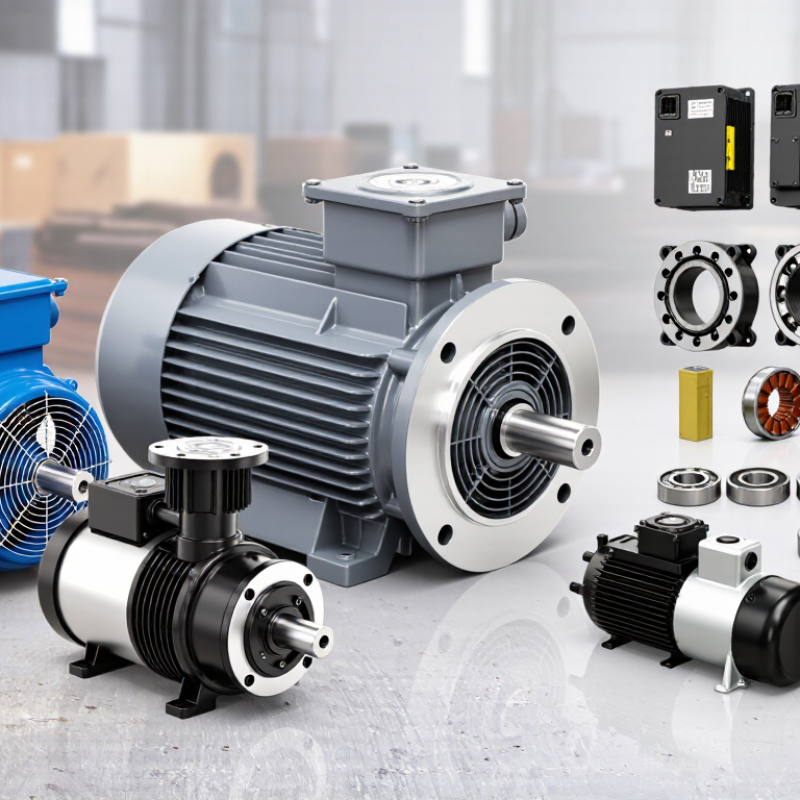
What Is the Best Three Phase Electric Motor in 2026?

Time:2026-11-25 Author:Madeline
0%

In 2026, the best Three Phase Electric Motor is not simply the most famous model. It is the unit that suits its load, operating hours, power supply, and installation. A pump, conveyor, or compressor places different demands on starting torque, speed, and cooling. Get those details wrong, and even a premium motor can run hot, waste energy, or fail early. Small details matter.

This guide compares practical selection factors, including rated output, efficiency class, enclosure, insulation, frame size, bearing design, and inverter compatibility. It also considers real operating conditions. Think dust near a workshop floor, warm air around a fan-cooled housing, and repeated starts during a shift. Measure the actual load. Nameplate values and manufacturer test conditions deserve close attention; catalog figures alone cannot predict every installation. Check service support and replacement-part availability, too.

There is no universal winner. A high-efficiency model may justify its purchase price in a continuously running plant, while a simpler option may suit intermittent duty better. The trade-off is easy to underestimate. This comparison aims to clarify where different motor types excel, what questions to ask suppliers, and which specifications need verification before purchase. Some recommendations will remain conditional, because the right answer depends on the machine and site—not a headline claim.

What Is the Best Three Phase Electric Motor in 2026?

How Three-Phase Electric Motors Work

What Is the Best Three Phase Electric Motor in 2026?
How Three-Phase Electric Motors Work

A three-phase motor turns electrical timing into steady rotation. Three stator windings receive alternating currents, each offset by 120 electrical degrees. Together, they create a magnetic field that rotates around the motor’s core. The rotor follows this moving field and produces torque at the shaft. Simple in principle. Less tidy in real machines. In an induction motor, the rotor runs slightly behind the magnetic field; this slip creates the current needed for torque. A synchronous motor, by contrast, runs in step with the field once synchronized. Frequency and pole count set synchronous speed: a four-pole motor runs at 1,500 rpm on 50 Hz power, or 1,800 rpm on 60 Hz.

The International Energy Agency’s 2011 report, Energy-Efficiency Policy Opportunities for Electric Motor-Driven Systems, estimated that these systems use about 46% of global electricity. That scale makes motor selection and control important. A variable-frequency drive can adjust a motor’s speed to match a pump or fan’s actual demand, rather than forcing the process to waste energy through throttling. But it is not an automatic upgrade: load profile, cooling, installation, and drive settings all matter. A motor that looks efficient on a specification sheet may perform poorly in a badly matched system. Check the real operating conditions.

What Is the Best Three-Phase Electric Motor in 2026? — How Three-Phase Electric Motors Work

Synchronous speed depends on the supply frequency and the number of motor poles: RPM = 120 × frequency (Hz) ÷ poles. These values are theoretical speeds; an induction motor typically runs slightly below synchronous speed under load because of slip. The best motor choice depends on the application, including required speed, torque, efficiency, and power supply.

Key Factors for Evaluating Motor Performance in 2026

In 2026, the best three-phase motor is the one that matches its real workload, not simply the highest-rated model. Efficiency matters: the IEA’s 2016 Energy-Efficient World report estimates that motor-driven systems use more than 40% of global electricity. The U.S. Department of Energy’s Improving Motor and Drive System Performance sourcebook puts motor-driven equipment at about 54% of U.S. manufacturing electricity use. Small efficiency gains can matter at scale. But only when the motor is properly selected and operated.

Check efficiency across the expected load range, especially if the motor runs below full load for long periods. IEC 60034-30-1 efficiency classes provide a useful comparison, but a nameplate rating does not describe every operating condition. Review starting torque, duty cycle, power factor, enclosure, and insulation class. For variable-speed applications, confirm the motor and drive are compatible; poor settings can increase heat and vibration. Picture a pump running quietly through a long shift. Its operating data may matter more than a single peak-efficiency figure.

Ask for measured current, temperature, and vibration under representative conditions, then compare them with the motor’s specifications. Check bearing access and spare-part availability, too; downtime is a performance cost. A polished datasheet can still mislead. I would also question assumptions about future load, since production needs change and forecasts are imperfect. The right choice balances efficiency, reliability, and the actual duty profile—not just purchase price.

What Is the Best Three Phase Electric Motor in 2026? - Key Factors for Evaluating Motor Performance in 2026

Evaluation Factor Three-Phase Induction Motor Permanent-Magnet Synchronous Motor Synchronous Reluctance Motor What to Check Before Selecting
Efficiency Available across a wide range of efficiency classes. Efficiency varies with rated power, speed, design, and load. Can provide high efficiency, particularly in variable-speed applications; performance depends on the motor and drive combination. Can achieve high efficiency without permanent magnets; efficiency depends on the design and operating point. Compare rated efficiency at the required output, pole count, frequency, and supply conditions. Check the applicable IEC efficiency class and local minimum-efficiency rules.
Speed and control Runs below synchronous speed under load. A variable-frequency drive can provide adjustable speed. Runs synchronously with the rotating magnetic field when correctly controlled; typically requires a compatible drive. Runs synchronously with the rotating magnetic field and generally uses a variable-frequency drive. Match the control method and usable speed range to the process. For an induction motor, synchronous speed is calculated as 120 × frequency ÷ number of poles; loaded speed is lower because of slip.
Starting and acceleration Commonly used for direct-on-line or drive-controlled starting, subject to motor design and supply limits. Usually started and controlled by an appropriate electronic drive. Usually started and controlled by a variable-frequency drive. Check starting torque, acceleration time, load inertia, permitted starting current, and whether the electrical supply can support the starting method.
Part-load performance Efficiency and power factor can decline at light load; the amount depends on motor size and design. May perform well over a broad speed range, but results depend on motor sizing and drive settings. Can be suitable for variable-load operation, but motor and drive performance must be assessed together. Use the actual load profile—not only the nameplate rating—to compare energy consumption over a typical operating cycle.
Maintenance and construction Rugged, widely used construction. Wound-rotor designs have additional rotor components; standard squirrel-cage designs do not use brushes. May contain permanent-magnet materials and typically depends on electronic control equipment. Does not require permanent magnets, but normally depends on electronic control equipment. Consider bearing life, cooling, enclosure, drive maintenance, repair capability, and the availability of qualified service.
Operating environment Available in designs for many industrial environments; protection and cooling options vary. Suitability depends on motor design, drive, temperature limits, and application requirements. Suitability depends on motor design, drive, temperature limits, and application requirements. Confirm ingress-protection rating, insulation system, ambient-temperature range, cooling method, mounting arrangement, and hazardous-area certification where required.
Purchase and lifecycle cost Often a practical choice where robustness, common service support, and standard supply are priorities. Assess the combined motor-and-drive price, energy use, and any magnet-material considerations. Assess the combined motor-and-drive price, energy use, and commissioning requirements. Compare total cost of ownership, including purchase, installation, energy, maintenance, downtime, and expected service life.
Best-fit application General-purpose pumps, fans, compressors, conveyors, and other fixed- or variable-speed industrial duties. Applications where compactness, high efficiency, or precise variable-speed control is important and a compatible drive is available. Variable-speed applications seeking high efficiency without permanent magnets and using a compatible drive. The best motor is the one that meets the load, control, environmental, efficiency, service, and lifecycle-cost requirements—not necessarily the motor with the highest efficiency class alone.

Selection note: Efficiency-class requirements and test conditions depend on the motor’s rating and the regulations applicable in the installation location. Verify the nameplate data, manufacturer’s test documentation, and motor-drive compatibility before purchase.

Common Three-Phase Motor Types and Their Differences

Three-phase motors differ in how they create and maintain rotation. The common squirrel-cage induction motor is rugged, widely available, and usually easy to service. Its rotor runs slightly slower than the rotating magnetic field, a difference called slip. The International Energy Agency estimated in its 2011 energy-efficiency report that motor-driven systems use about 45% of global electricity. Small efficiency gains can matter at this scale.

Synchronous motors lock rotor speed to the supply frequency, making speed predictable under steady conditions. Permanent-magnet designs can deliver high efficiency and compact output, but require suitable electronic drives and careful thermal design. Synchronous-reluctance motors avoid rotor magnets, yet also rely on a drive for controlled operation. Not always a simple swap. Starting methods, load changes, and maintenance needs can shift the best choice.

For many pumps and fans, induction motors remain practical; variable-speed drives can reduce wasted throttling. For frequent speed changes or tight efficiency targets, synchronous options may be worth comparing. IEC 60034-30-1 sets IE efficiency classes for covered motor types, giving buyers a more consistent comparison than nameplate power alone. Check the exact rating conditions and duty cycle. A motor that looks best on a data sheet may disappoint if it is oversized, poorly matched, or run at partial load for long periods. I would treat lifecycle energy estimates as useful, not exact; real operating data is often incomplete.

How Operating Conditions Affect Motor Selection

What Is the Best Three Phase Electric Motor in 2026?

How Operating Conditions Affect Motor Selection

The best motor is the one matched to its actual duty, not simply the one with the highest efficiency label. The International Energy Agency’s 2011 report, Energy Efficiency Policy Opportunities for Electric Motor-Driven Systems, estimates that electric motors use about 45% of global electricity. That scale makes operating details matter. A pump running steadily needs a different selection from a conveyor that starts and stops every few minutes.

Check the load profile, supply voltage, starting torque, and hours of operation before comparing models. For variable-speed loads, a compatible drive can reduce wasted energy, but repeated low-speed operation may limit cooling in a standard fan-cooled motor. Hot rooms, dust, moisture, and high altitude also affect insulation life and heat removal. Small details. A motor near a washdown hose may need a more protective enclosure, while a dusty mill needs attention to cooling passages and maintenance access.

The U.S. Department of Energy’s Improving Motor and Drive System Performance: A Sourcebook for Industry reports that motor-driven systems account for roughly 68% of electricity use in U.S. manufacturing. This is why annual energy use deserves a closer look than purchase price alone. Estimate the real load and run hours, then compare efficiency at the operating point—not just at full load. I would still verify the assumptions with measured current and temperature; nameplate data can make a selection look more certain than it is.

Choosing the Best Three-Phase Motor for Each Application

The best three-phase electric motor in 2026 depends on the work it must do. A pump, conveyor, and air compressor place different demands on a motor. Check the required speed, starting torque, operating hours, and supply voltage before comparing models. A fan usually suits a variable-torque motor, while a loaded conveyor needs steady torque at startup. Dust, heat, moisture, and limited ventilation also affect enclosure and cooling choices.

A motor sized only from a machine’s peak rating may be inefficient during normal operation. Measure the actual load where possible, then compare it with the motor’s rated power and current. Check insulation, enclosure protection, and compatibility with a variable-frequency drive if speed control is needed. In practical installations, small details matter: a clogged fan cover or frequent starts can raise operating temperatures. A spreadsheet helps, but it can miss these conditions. I would not treat any sizing rule as a substitute for checking the real duty cycle.

Tips: Read the nameplate. Check the load at startup. Leave room for airflow. If the operating pattern is uncertain, record current and temperature across a typical shift before choosing. Do not oversize “just in case”; that choice can bring its own losses.

FAQS

How does a three-phase motor create rotation?

Three stator windings receive alternating currents, spaced 120 electrical degrees apart. Their combined magnetic field rotates. The rotor follows it, turning the shaft. Simple in theory.

What is the difference between induction and synchronous motors?

An induction motor’s rotor runs slightly behind the rotating field. This slip helps create torque. A synchronous motor runs in step after synchronization.

What determines a motor’s synchronous speed?

Supply frequency and pole count set the speed. A four-pole motor runs at 1,500 rpm on 50 Hz power, or 1,800 rpm on 60 Hz.

What is the best three-phase motor in 2026?

The best choice matches the real workload, operating hours, and site conditions. A high-rated model may not suit a lightly loaded pump. Check the actual duty cycle.

What should I check before selecting a motor?

Check required speed, startup torque, supply voltage, duty cycle, and expected load. Also review enclosure, cooling, and insulation. Dust and heat matter.

Can a variable-frequency drive reduce energy use?

It can match motor speed to changing pump or fan demand. Results depend on load, cooling, installation, and drive settings. Not an automatic upgrade.

How can I assess a motor’s performance in use?

Measure current, temperature, and vibration during representative operation. Compare the readings with specifications. A quiet pump can still run too hot.

Is it wise to oversize a motor “just in case”?

Not always. Oversizing can cause losses when the motor usually runs below its useful load. Record current across a typical shift if demand is uncertain. Forecasts can be wrong.

Conclusion

Choosing the best Three Phase Electric Motor in 2026 depends on how well its design matches the work it needs to perform. These motors use three alternating electrical currents to create a rotating magnetic field, delivering steady power for many industrial and commercial applications. Comparing motor performance means looking beyond rated output to factors such as efficiency, starting behavior, speed, torque, duty cycle, maintenance needs, and compatibility with the power supply and control system.

Common options, including induction and synchronous motors, differ in construction, speed characteristics, efficiency, and control requirements. The right choice also depends on operating conditions such as load variation, temperature, humidity, dust, vibration, and available space. By assessing these conditions alongside the application’s needs, buyers can select a motor that balances reliable operation, energy use, and lifecycle cost rather than simply choosing the highest-rated model.

Madeline

Madeline

Madeline is a dedicated marketing professional with a wealth of expertise in our company's core offerings. With a keen understanding of the industry, she brings a unique perspective to her role, consistently delivering high-quality content that highlights the superior aspects of our products. As......