Choosing the right Squirrel Cage Induction Motor in 2026 requires more than comparing catalog prices. Global buyers must examine efficiency, rated power, voltage, frequency, enclosure design, starting torque, and operating conditions. A 75 kW motor for a dusty cement plant needs different protection from a 75 kW unit inside a clean packaging facility. IP ratings, insulation classes, cooling methods, and bearing quality can directly affect service life. Small specification gaps often become expensive maintenance problems.
This guide reviews practical motor-selection factors for international purchasing teams, engineers, and equipment distributors. It considers common industrial applications, including pumps, compressors, conveyors, fans, and processing machinery. Reliable evaluation should include verified test data, manufacturer experience, warranty terms, spare-parts access, and documented compliance with relevant regional requirements. Efficiency matters, but so does performance during frequent starts or unstable loads. A motor that looks excellent on paper may disappoint in harsh field conditions. That deserves careful reflection.
No ranking is perfect. Supplier support can vary by country, and published performance data may not reflect every installation. Buyers should confirm actual duty cycles, ambient temperatures, altitude, and grid conditions before placing orders. Clear technical communication prevents avoidable mistakes. This overview aims to help readers compare leading 2026 options with greater confidence, while recognizing that the best motor depends on the machine, workplace, and long-term operating plan. Practical evidence matters most.
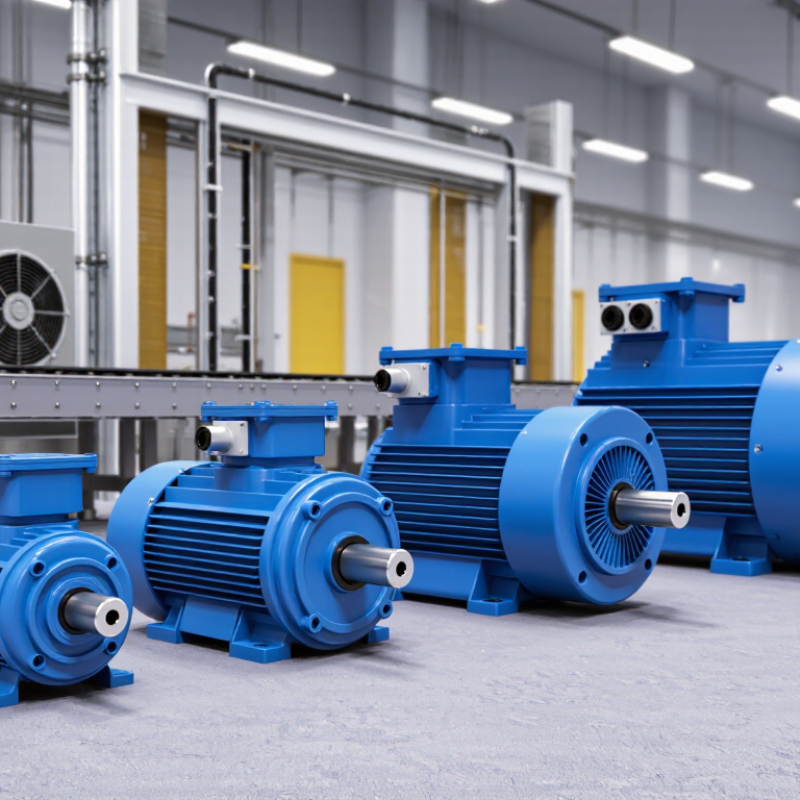
2026 Best Squirrel Cage Induction Motors for Global Buyers
What Squirrel Cage Induction Motors Are and How They Work
A squirrel cage induction motor uses a stationary stator and a rotating cage-shaped rotor. The rotor contains conductive bars joined by end rings. These parts usually sit inside a laminated steel core. There are no brushes or slip rings in the standard design.
When three-phase alternating current enters the stator windings, it creates a rotating magnetic field. This field cuts across the rotor bars and induces current in them. The resulting magnetic force turns the rotor in the same direction. The rotor must move slightly slower than the magnetic field. This difference is called slip, and it produces useful torque.
In field installations, this simple structure often proves valuable. Dust, vibration, and frequent starts can challenge more delicate motor designs. A sealed enclosure and suitable insulation still matter. They are not optional details. Buyers should check rated voltage, frequency, output, efficiency class, starting current, and mounting dimensions. Cooling method and ambient temperature also affect service life.
A direct-on-line start may create a sharp current surge. A variable frequency drive can reduce that stress and control speed more smoothly. However, poor drive settings may cause overheating or unwanted bearing currents. That part is easy to overlook. I have seen motor selection treated as a catalog exercise, but the driven load changes everything. Pumps, fans, conveyors, and compressors need different starting and torque characteristics. Manufacturer test data and independent inspection provide stronger evidence than a promising specification sheet.
| Evaluation Dimension | Typical Specification or Fact | How It Works or Why It Matters | Buyer Guidance for 2026 |
|---|---|---|---|
| Motor type | Asynchronous AC motor with a laminated stator and a squirrel cage rotor | The stator creates a rotating magnetic field, which induces current in the rotor bars. No electrical connection to the rotor is required. | Choose this design for robust, low-maintenance operation in pumps, fans, compressors, conveyors, and general industrial machinery. |
| Rotor construction | Conductive bars fitted into rotor slots and connected at both ends by short-circuiting end rings | The bars and end rings form a closed electrical circuit in which induced rotor currents produce torque. | Verify rotor material, balancing quality, bar design, and suitability for the required starting torque and duty cycle. |
| Common power supply | Three-phase AC; common industrial systems include 400 V at 50 Hz and 460 V at 60 Hz | The three phase currents generate a rotating magnetic field with nearly constant torque production. | Match rated voltage, frequency, phase arrangement, connection method, and local electrical regulations before ordering. |
| Synchronous speed | Calculated using ns = 120f / P, where f is frequency in hertz and P is the number of poles | At 50 Hz, a two-pole motor has a synchronous speed of 3,000 rpm; a four-pole motor has 1,500 rpm. At 60 Hz, the values are 3,600 rpm and 1,800 rpm. | Use pole count and supply frequency to estimate speed, then check the actual rated speed on the motor nameplate. |
| Slip | Typical full-load slip is approximately 1%–6%, depending on motor size and design | The rotor must rotate slightly slower than the rotating magnetic field to induce current and develop torque. | A lower slip generally supports better speed regulation, but starting torque, efficiency, load profile, and cost must also be considered. |
| Starting method | Direct-on-line, star-delta, soft starter, or variable frequency drive | Starting equipment controls inrush current, acceleration torque, mechanical stress, and voltage disturbance. | Use direct-on-line only when the electrical network and driven machine can tolerate the starting current and torque. |
| Starting current | Direct-on-line starting current is commonly about 5–8 times rated current, but the exact value varies by design | Low rotor impedance during standstill allows a large current to flow while the motor builds electromagnetic torque. | Confirm locked-rotor current, available short-circuit capacity, protective-device settings, and permitted voltage drop. |
| Efficiency selection | High-efficiency motors are commonly classified under international efficiency classes such as IE3 or IE4 | Efficiency is the ratio of mechanical output power to electrical input power. Higher efficiency reduces operating losses. | Compare efficiency at the actual operating load, not only at rated load, and check the energy-efficiency rules of the destination market. |
| Power factor | Typical full-load power factor is approximately 0.80–0.95, depending on rating and design | Magnetizing current creates reactive power, so current may be higher than the current calculated from real power alone. | Evaluate power factor together with efficiency when sizing cables, transformers, generators, and power-factor correction equipment. |
| Rated duty | Continuous duty, commonly designated S1, is widely used for steady industrial loads | An S1 motor can operate continuously at a constant load within its rated thermal limits. | For frequent starts, rapid cycling, braking, or intermittent loads, verify the correct duty class and thermal capacity. |
| Enclosure protection | Common ratings include IP55 for protection against dust ingress that could interfere with operation and water jets | The IP code defines protection against solid objects and water under specified test conditions; it does not measure corrosion resistance. | Select a higher protection level or additional sealing when the motor faces washdown, heavy dust, humidity, or outdoor exposure. |
| Cooling method | Totally enclosed fan-cooled construction, commonly identified as IC411, is widely used | An external fan mounted on the rotor shaft moves air over the motor frame to remove heat. | Keep cooling fins and fan covers clear; for low-speed inverter operation, check whether independent ventilation is needed. |
| Insulation system | Class F insulation is common; Class H provides a higher thermal capability | Insulation class indicates the maximum thermal endurance of the insulation system, not the permitted operating temperature by itself. | Check temperature rise, ambient temperature, altitude, overload conditions, and inverter voltage stress in addition to insulation class. |
| Ambient conditions | Many standard designs are rated around 40°C ambient and up to approximately 1,000 m altitude, subject to the datasheet | Higher temperature and altitude reduce cooling effectiveness and may require derating. | Provide installation altitude, ambient temperature, humidity, corrosive gases, dust level, and enclosure location before specification. |
| Mechanical mounting | Common mounting arrangements include foot-mounted, flange-mounted, and combined foot-and-flange designs | Mounting geometry determines how the motor aligns with the driven equipment and how mechanical loads are transferred. | Confirm frame size, shaft height, shaft diameter, keyway, flange dimensions, bolt pattern, and direction of rotation. |
| Bearing arrangement | Rolling-element bearings are widely used; bearing type and lubrication depend on motor size and application | Bearings support the rotor and transfer radial or axial loads while maintaining the air gap. | Check allowable external radial and axial loads, relubrication requirements, bearing-monitoring options, and spare-parts availability. |
| Variable frequency drive compatibility | Many squirrel cage motors can be operated with a VFD when specified for inverter duty | The drive changes frequency and voltage to control speed, while fast voltage transitions may increase insulation and bearing stress. | Confirm minimum speed, constant-torque or variable-torque profile, cable length, insulation capability, grounding, and bearing-current protection. |
| Maintenance requirement | Generally low maintenance because the rotor has no brushes, slip rings, or rotor windings requiring electrical connections | The simple rotor construction reduces wear components and eliminates routine brush replacement. | Schedule inspections for vibration, temperature, insulation resistance, alignment, fan cleanliness, terminal tightness, and bearing condition. |
| Best-fit applications | Pumps, fans, blowers, compressors, conveyors, machine tools, mixers, and general-purpose industrial equipment | The motor provides a durable rotating drive with simple control and good reliability across many constant-speed applications. | For very high starting torque, frequent speed changes, or specialized braking, compare the design with other motor technologies. |
It has a stationary stator and a rotating rotor shaped like a cage. Conductive bars connect to end rings inside a laminated steel core. The design uses no brushes or slip rings in its standard form. Simple parts help.
Three-phase alternating current creates a rotating magnetic field in the stator. The field induces current in the rotor bars. Magnetic force then turns the rotor in the same direction. The rotor moves slightly slower than the field. This speed difference is called slip.
They commonly drive pumps, fans, compressors, conveyors, and processing equipment. A conveyor may need strong starting torque under a full load. A compressor may need careful thermal control during repeated starts. The load changes everything.
Check voltage, frequency, output, efficiency class, starting current, and mounting dimensions. Also review insulation class, enclosure rating, cooling method, bearing design, and service factor. Confirm the ambient temperature and moisture conditions. A cold room differs from a dusty factory.
Direct-on-line starting can create a sharp current surge. A variable frequency drive can reduce stress and control speed smoothly. Poor drive settings may cause overheating or unwanted bearing currents. This detail is easy to miss.
Compare measured efficiency under recognized testing conditions, not only the nameplate rating. Review the motor’s load profile, starting frequency, speed control, and annual running hours. A motor below half load may provide disappointing savings. Bigger is not always better.
Alignment, lubrication, cooling, insulation, and vibration control strongly affect service life. Dust and vibration may be tolerated, but overheating still causes damage. Maintenance access should be practical, not merely listed in a brochure. Records matter.
Include purchase, installation, electricity, downtime, spare parts, and disposal costs. Compare expected costs over ten years instead of using the invoice alone. Higher efficiency may repay its premium after many operating hours. Payback estimates can still be wrong when tariffs or loads change.
Choosing the best Squirrel Cage Induction Motor in 2026 requires more than comparing purchase prices. These motors operate by creating a rotating magnetic field that induces current in the rotor, providing a durable, low-maintenance solution for pumps, fans, compressors, conveyors, and other industrial equipment. Buyers should evaluate power rating, voltage, frequency, starting torque, speed control, insulation class, protection level, operating environment, and compliance with applicable efficiency standards.
A reliable selection balances energy efficiency, mechanical strength, service life, and total cost of ownership. High-efficiency designs may reduce long-term electricity and maintenance expenses, while application-specific configurations can improve performance under heavy loads, variable speeds, dust, moisture, or frequent starts. Global buyers should also confirm documentation, testing certificates, delivery schedules, spare-part availability, warranty terms, technical support, and after-sales service. A careful comparison of these factors helps organizations choose a motor that delivers dependable operation, predictable costs, and compliance across international markets.

 Sunvim Motor